Yellow Coneflower (Echinacea paradoxa)
Hardy, summer-flowering, North American perennial
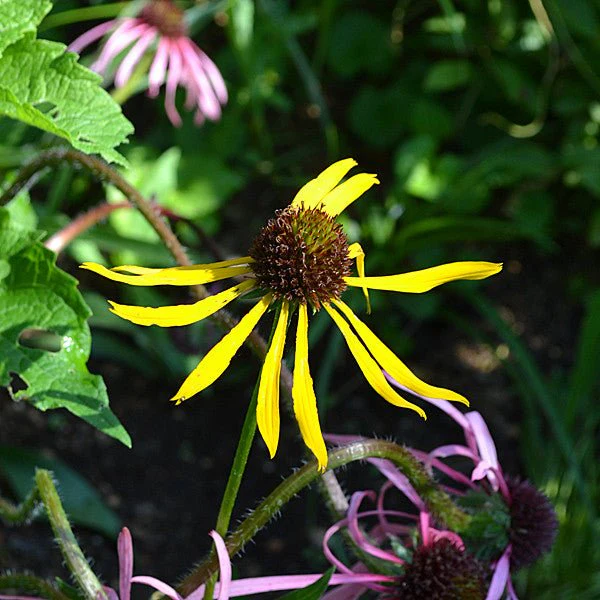
Description: Striking yellow, reflexed ray florets (petals) and a conical, chocolate-brown disk
Habit: Single flowers rise on slender, 2-4' tall stems; basal leaves form clumps up to 2' wide
Culture: Prefers well-drained, medium to dry soil and full sun; drought-tolerant
Hardiness: Cold hardy to USDA Zone 3
Origin: North America
Attributes: Attracts butterflies, bees, and birds, cut flower, deer resistant, drought tolerant
Coneflowers are North American species used as medicinal herbs for centuries by Native Americans and Europeans. They have been used for everything from preventing colds and flu to treating snake bites and smallpox. Many species are now endangered in the wild due to over-collecting. The "paradox" of this species, which is found in the Central Plains and the Ozarks, is that the petals are yellow instead of the usual purple. It was identified in 1902 and is being propagated responsibly in the nursery trade today. Deer are not attracted to this plant.
Arrives in a 1 quart pot.
Original: $12.00
-65%$12.00
$4.20Product Information
Product Information
Shipping & Returns
Shipping & Returns
Description
Hardy, summer-flowering, North American perennial
Description: Striking yellow, reflexed ray florets (petals) and a conical, chocolate-brown disk
Habit: Single flowers rise on slender, 2-4' tall stems; basal leaves form clumps up to 2' wide
Culture: Prefers well-drained, medium to dry soil and full sun; drought-tolerant
Hardiness: Cold hardy to USDA Zone 3
Origin: North America
Attributes: Attracts butterflies, bees, and birds, cut flower, deer resistant, drought tolerant
Coneflowers are North American species used as medicinal herbs for centuries by Native Americans and Europeans. They have been used for everything from preventing colds and flu to treating snake bites and smallpox. Many species are now endangered in the wild due to over-collecting. The "paradox" of this species, which is found in the Central Plains and the Ozarks, is that the petals are yellow instead of the usual purple. It was identified in 1902 and is being propagated responsibly in the nursery trade today. Deer are not attracted to this plant.
Arrives in a 1 quart pot.