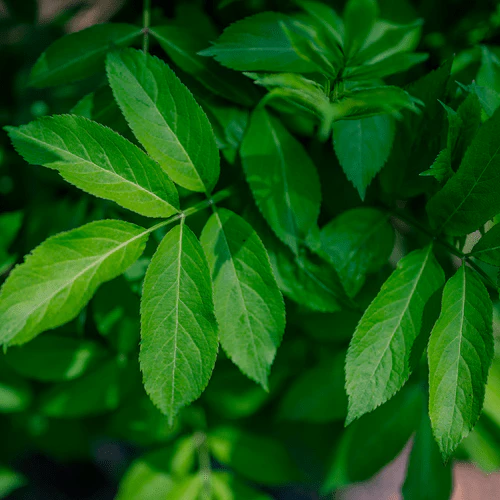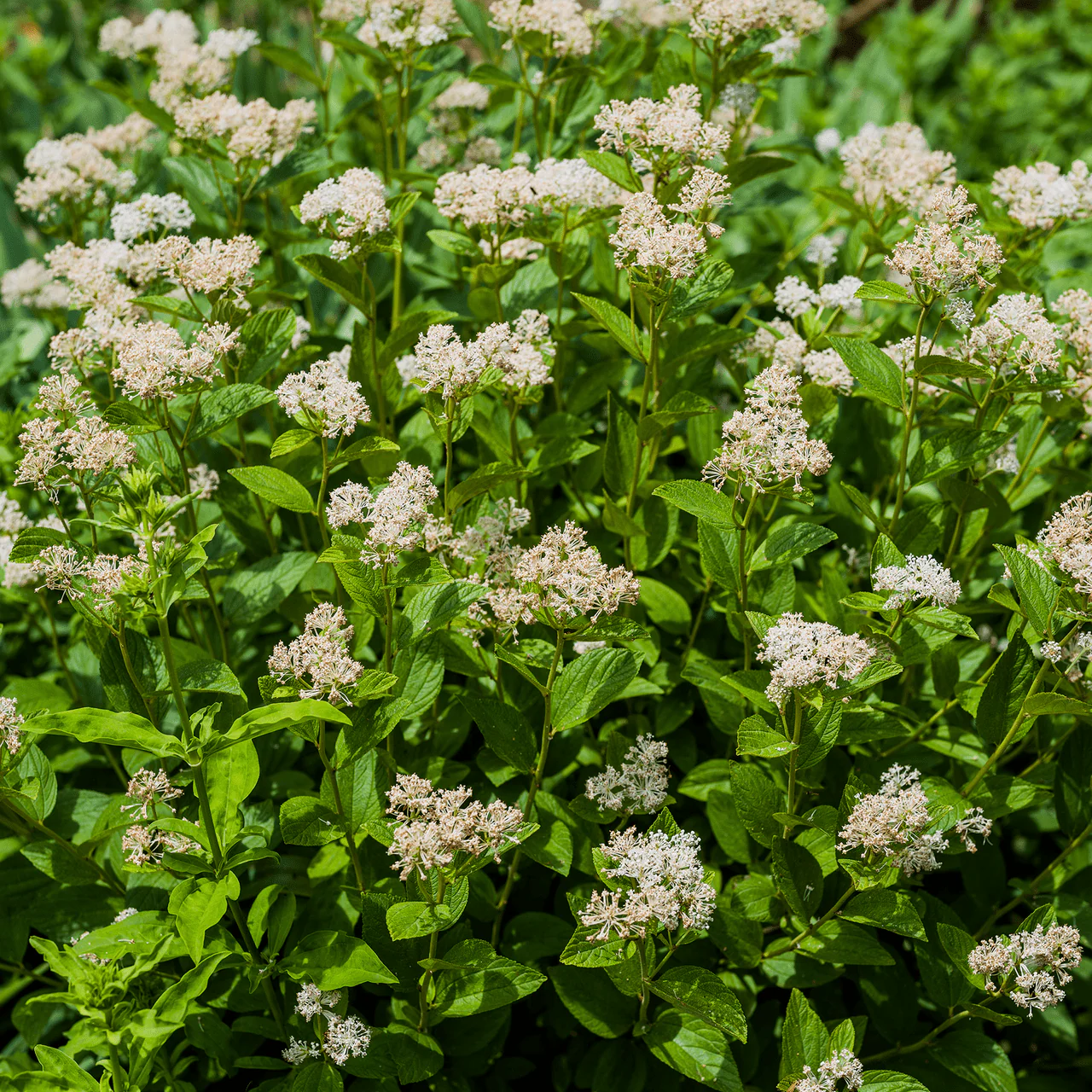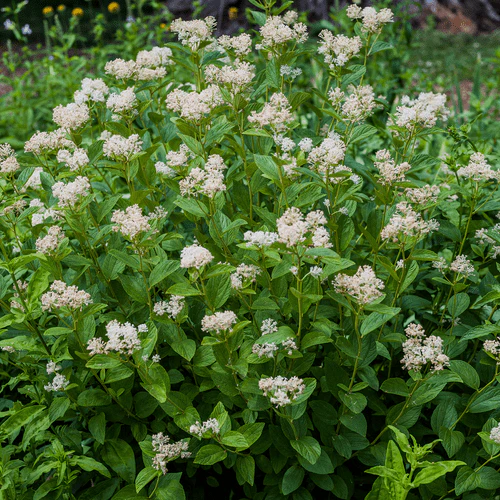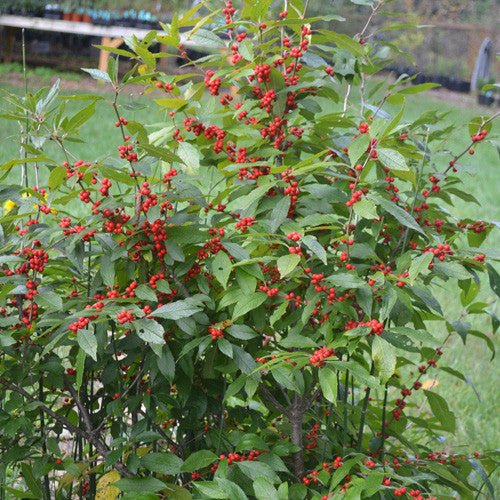
Winterberry Holly (female) (Ilex verticillata 'Winter Red')
Deciduous North American shrub
Description: Bright red fruits persist through the winter; dark green foliage turns yellow in autumn
Habit: Grows 6 to 10 feet tall and wide, suckering
Culture: Prefers moist, acidic soils high in organic matter and full sun to part shade
Hardiness: Cold hardy to USDA Zone 3
Origin: North America
Attibutes: Winter berries, rain garden, attracts birds
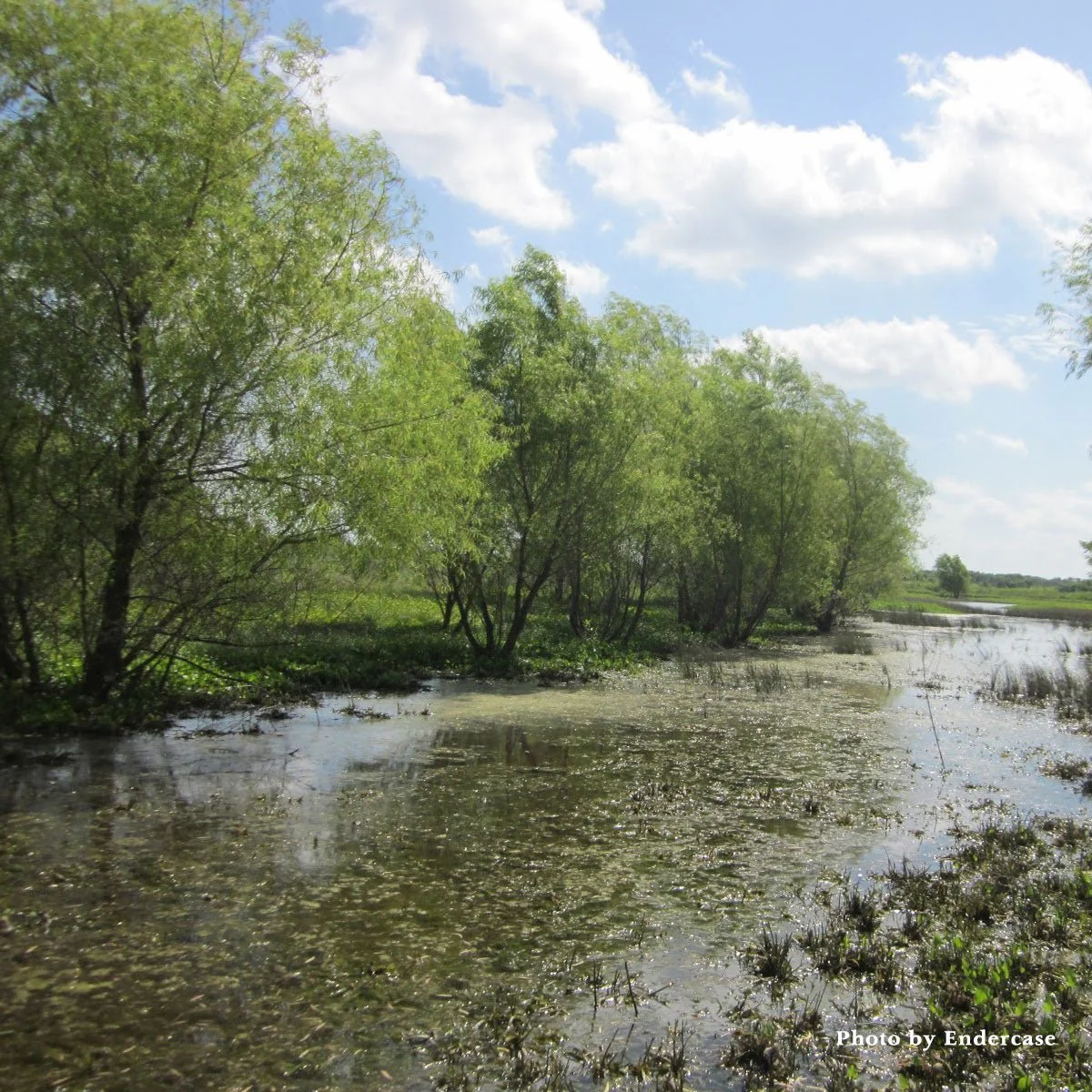
This native shrub, also known as "black alder," ranges from Newfoundland to Minnesota, south to Georgia and Tennessee and is typically found in swamps and by ponds. It was introduced to European gardens in 1736. The fruits are highly ornamental and edible to birds and wildlife. Garden historian Ann Leighton believes this is the "Red Berry" George Washington looked for when riding out to find movable shrubs and trees for Mount Vernon. The shrub was initially given the name Prinos verticillatus by Carolus Linaeus, indicating that this is the species Philadelphia nurseryman Bernard McMahon listed as "Ilex prinoides -Deciduous Holly" in The American Gardener's Calendar, 1806. "Winter Red" is the female plant and requires a male plant, such as "Southern Gentleman" for sufficient pollination to produce red berries. zone3,zone4,zone5,zone6,zone7,zone8,zone9
Product Information
Product Information
Shipping & Returns
Shipping & Returns
Description
Deciduous North American shrub
Description: Bright red fruits persist through the winter; dark green foliage turns yellow in autumn
Habit: Grows 6 to 10 feet tall and wide, suckering
Culture: Prefers moist, acidic soils high in organic matter and full sun to part shade
Hardiness: Cold hardy to USDA Zone 3
Origin: North America
Attibutes: Winter berries, rain garden, attracts birds
This native shrub, also known as "black alder," ranges from Newfoundland to Minnesota, south to Georgia and Tennessee and is typically found in swamps and by ponds. It was introduced to European gardens in 1736. The fruits are highly ornamental and edible to birds and wildlife. Garden historian Ann Leighton believes this is the "Red Berry" George Washington looked for when riding out to find movable shrubs and trees for Mount Vernon. The shrub was initially given the name Prinos verticillatus by Carolus Linaeus, indicating that this is the species Philadelphia nurseryman Bernard McMahon listed as "Ilex prinoides -Deciduous Holly" in The American Gardener's Calendar, 1806. "Winter Red" is the female plant and requires a male plant, such as "Southern Gentleman" for sufficient pollination to produce red berries. zone3,zone4,zone5,zone6,zone7,zone8,zone9