Red-osier Dogwood (Cornus sericea)
Deciduous, Eastern North American shrub
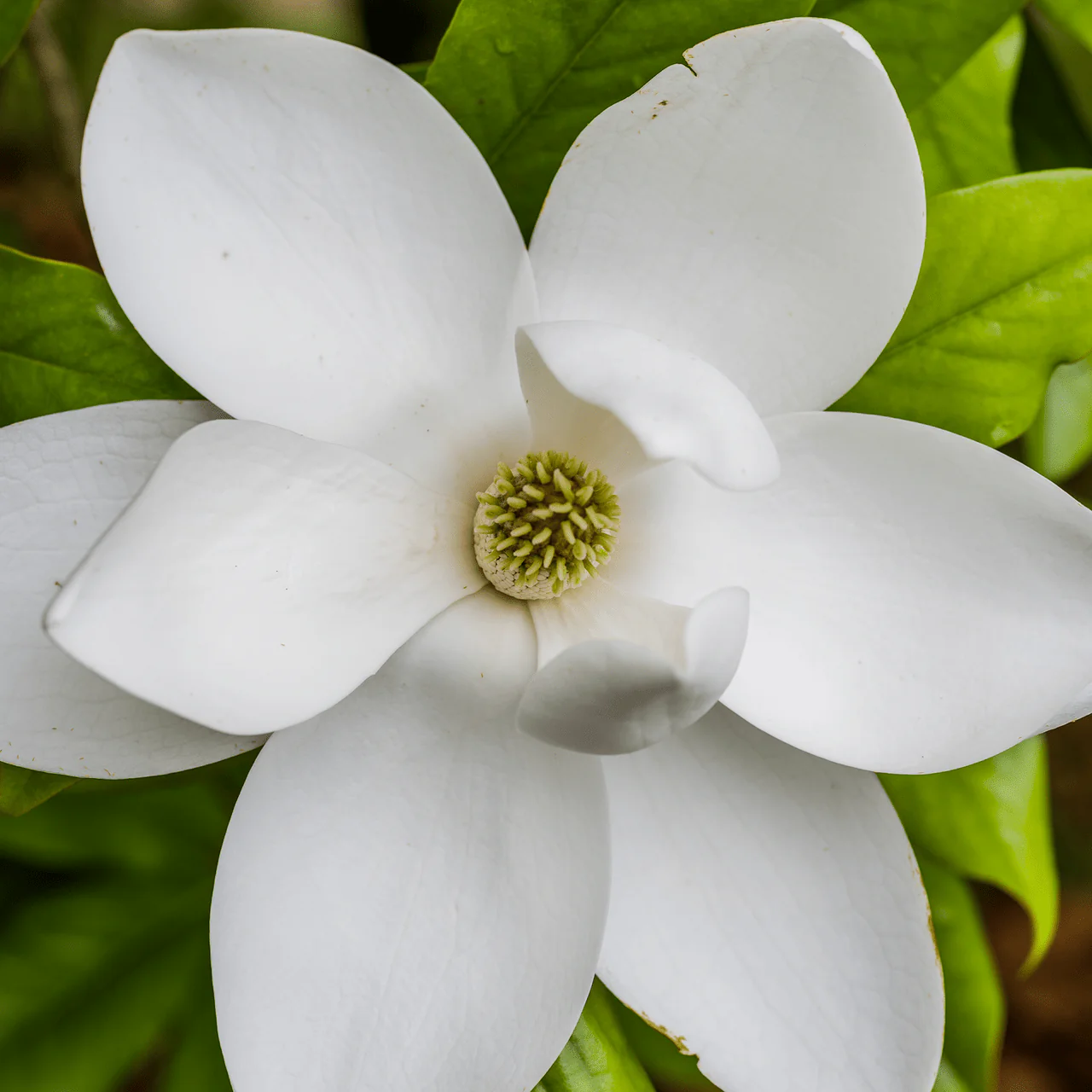
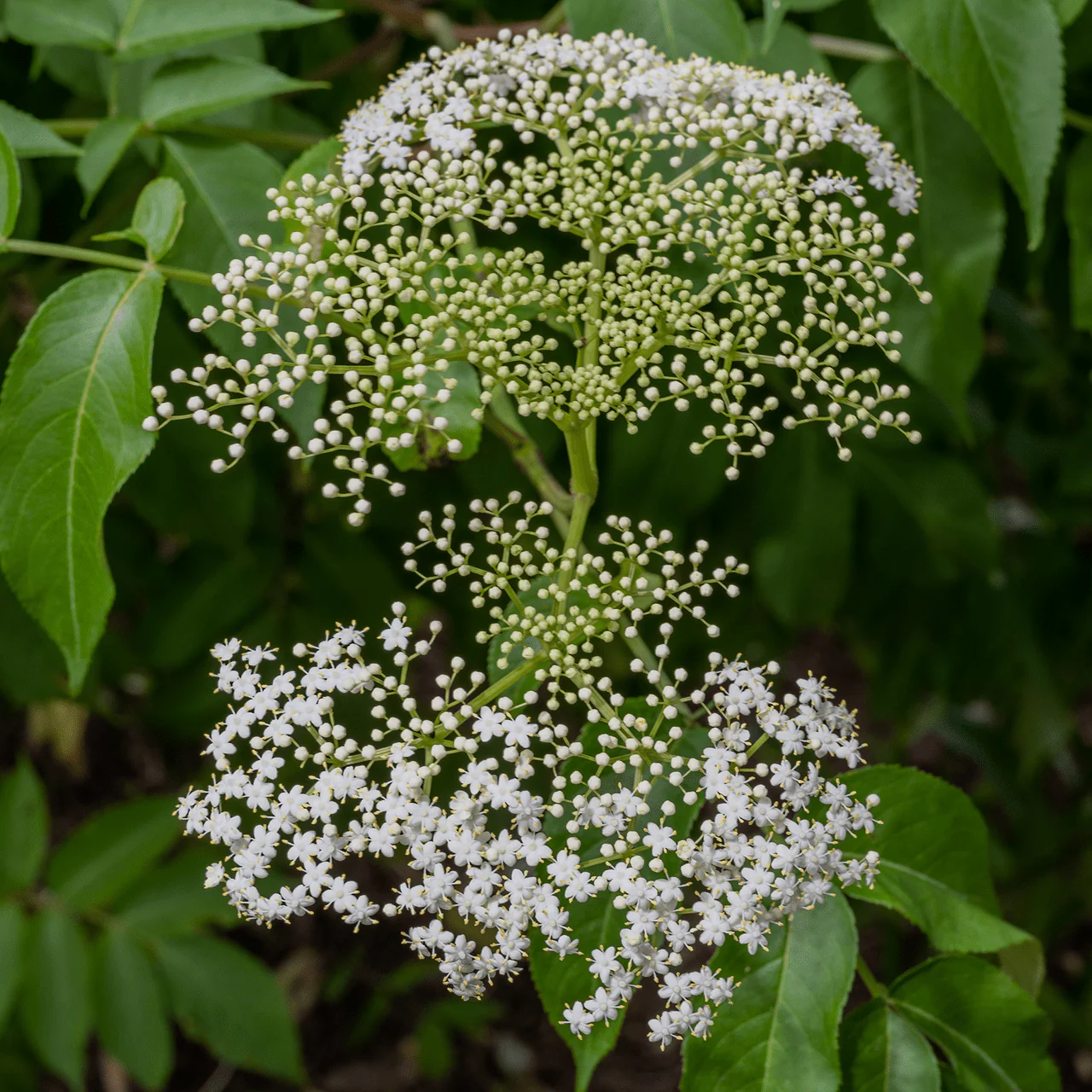
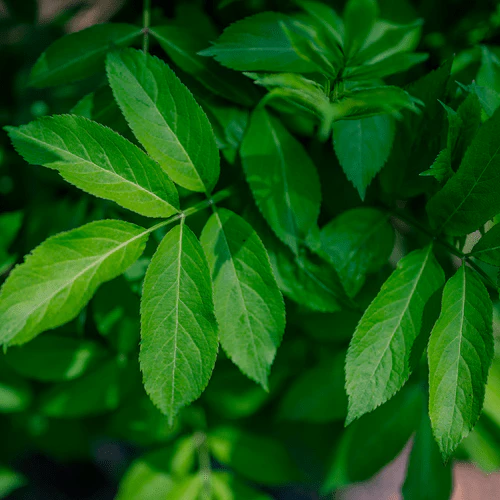
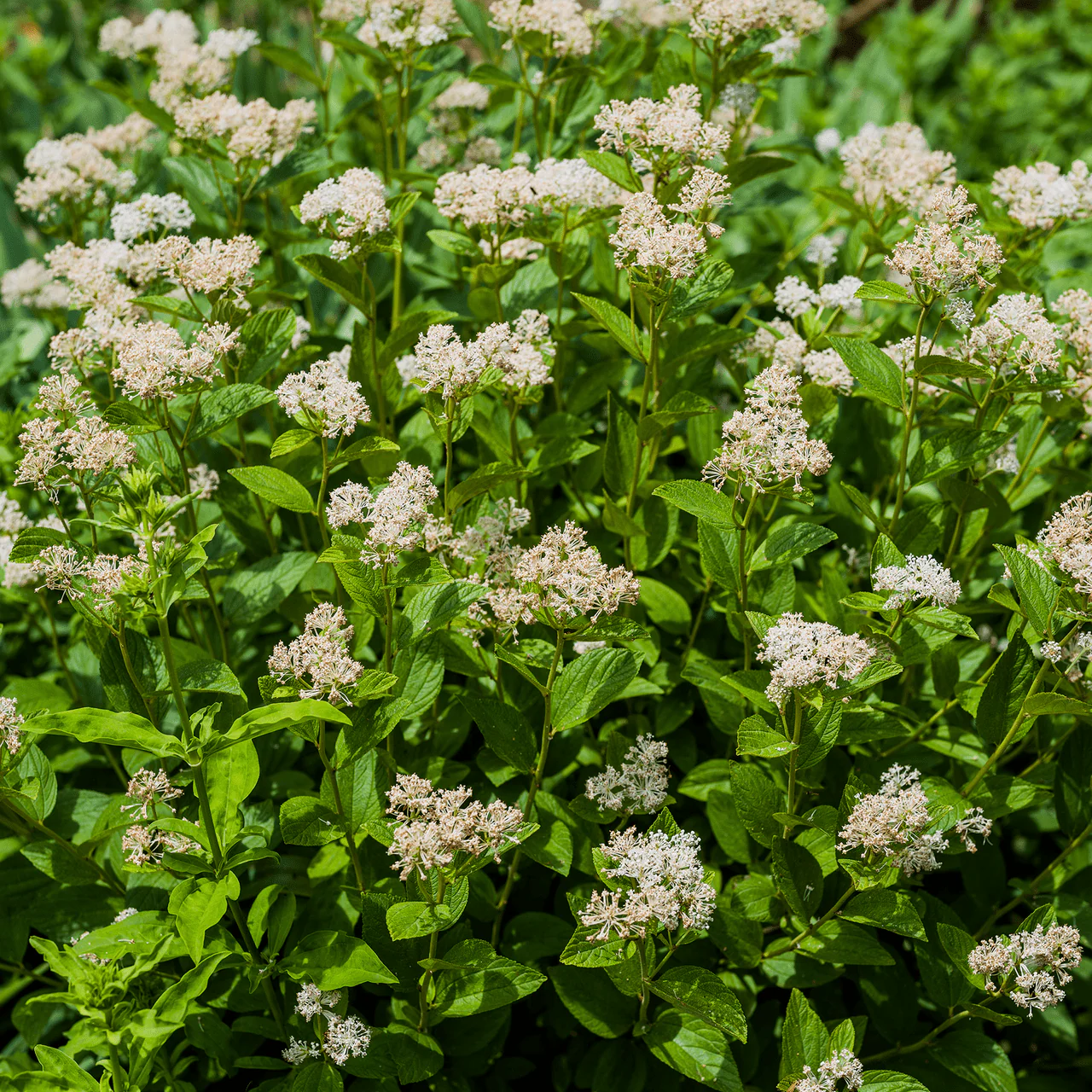
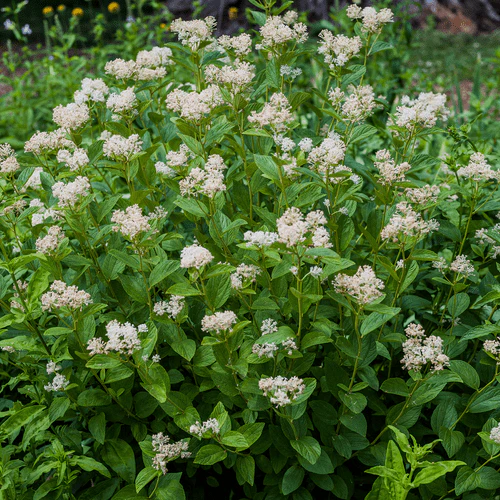
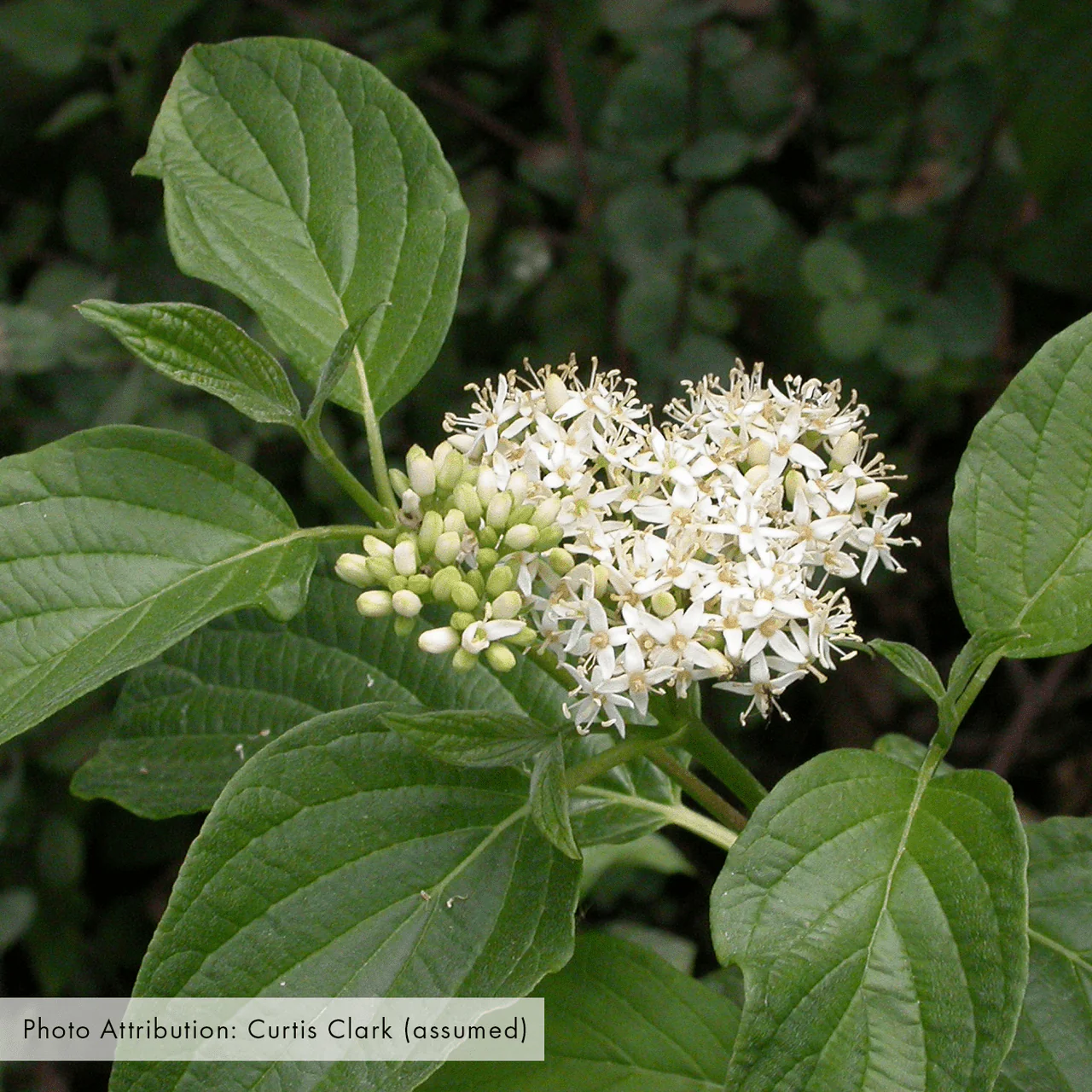
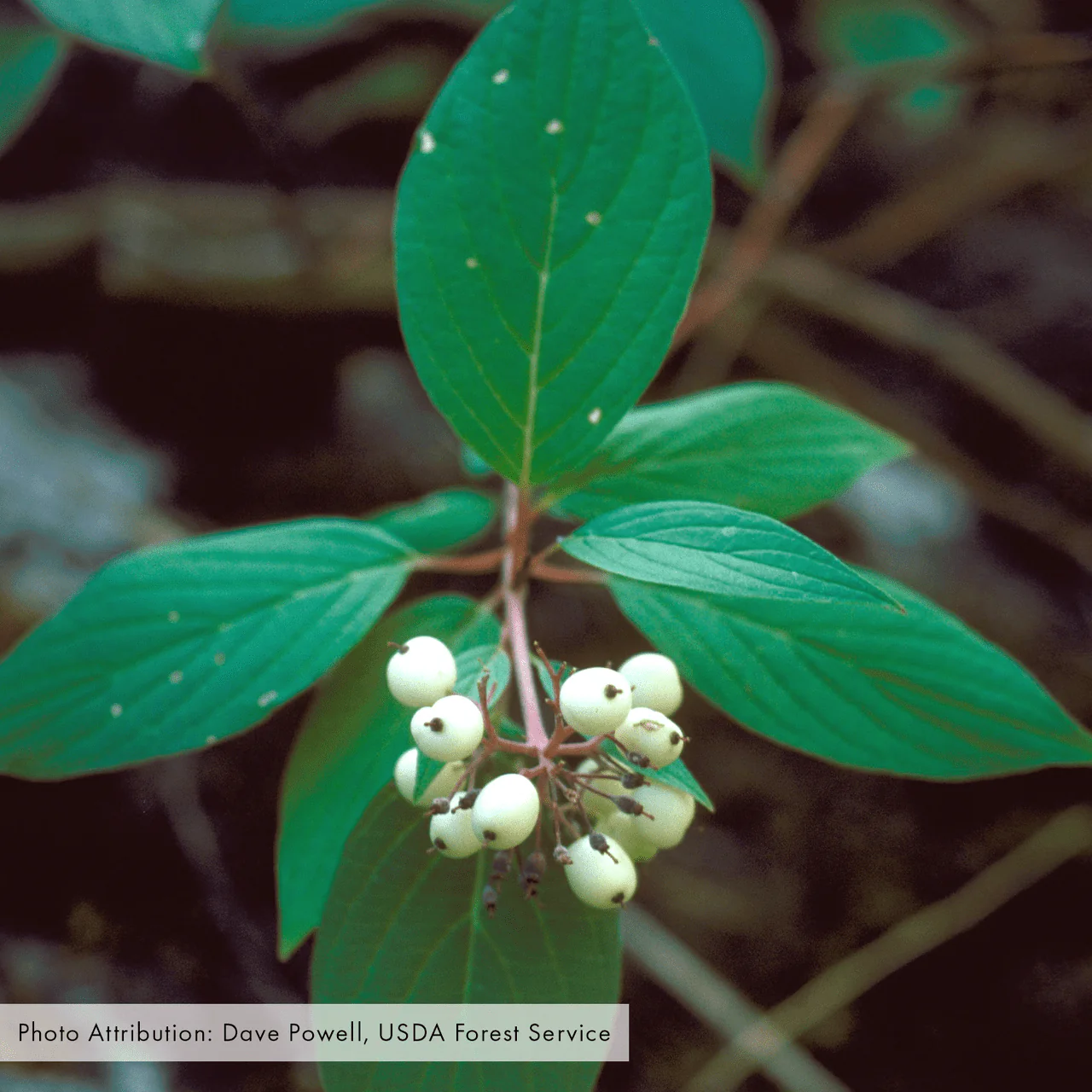
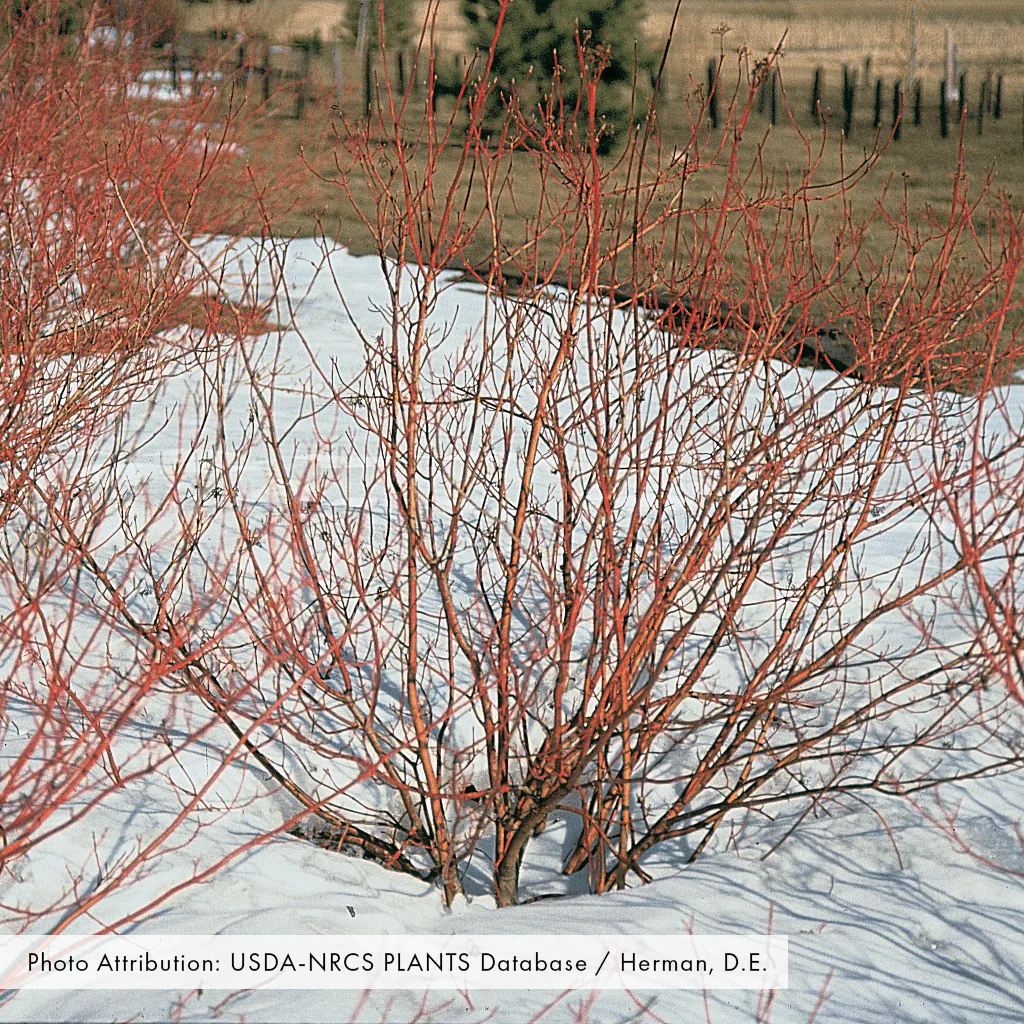
Description: White flowers in late spring followed by white fruit, which is slightly tinged bluish; bright crimson stems add winter interest
Habit: Grows 6 to 9 ft. high, forms a thicket with spreading by suckering roots
Culture: Prefers full sun to light shade; tolerates moist soil
Hardiness: Cold hardy to USDA Zone 2
Origin: North America
Attributes: Attractive bark, rain garden, deer resistant, attracts birds
This vigorous, suckering shrub was introduced to Europe in 1656. André Michaux named it Swida stolonifera but Linnaeus later changed it to Cornus sericea. John Bartram's Garden Catalogue of North American Plants, 1783, included this species as the "Red Willow" dogwood and Philadelphia nurseryman Bernard McMahon's Catalogue of Seeds, 1804, listed Cornus sericea as the "Blue-berried Dogwood." It was considered the "best red-barked shrub for winter effects" by garden writer Neltje Blanchan in The American Flower Garden, 1913. The fruits are attractive to birds while the foliage is not attractive to deer.
ne2,zone3,zone4,zone5,zone6,zone7,zone8,zone9
Original: $34.00
-65%$34.00
$11.90Product Information
Product Information
Shipping & Returns
Shipping & Returns
Description
Deciduous, Eastern North American shrub
Description: White flowers in late spring followed by white fruit, which is slightly tinged bluish; bright crimson stems add winter interest
Habit: Grows 6 to 9 ft. high, forms a thicket with spreading by suckering roots
Culture: Prefers full sun to light shade; tolerates moist soil
Hardiness: Cold hardy to USDA Zone 2
Origin: North America
Attributes: Attractive bark, rain garden, deer resistant, attracts birds
This vigorous, suckering shrub was introduced to Europe in 1656. André Michaux named it Swida stolonifera but Linnaeus later changed it to Cornus sericea. John Bartram's Garden Catalogue of North American Plants, 1783, included this species as the "Red Willow" dogwood and Philadelphia nurseryman Bernard McMahon's Catalogue of Seeds, 1804, listed Cornus sericea as the "Blue-berried Dogwood." It was considered the "best red-barked shrub for winter effects" by garden writer Neltje Blanchan in The American Flower Garden, 1913. The fruits are attractive to birds while the foliage is not attractive to deer.
ne2,zone3,zone4,zone5,zone6,zone7,zone8,zone9